
My journey of architectural discovery in Mali: Bamako (Part 1)
The traditional herbalist's market inside the Médine market

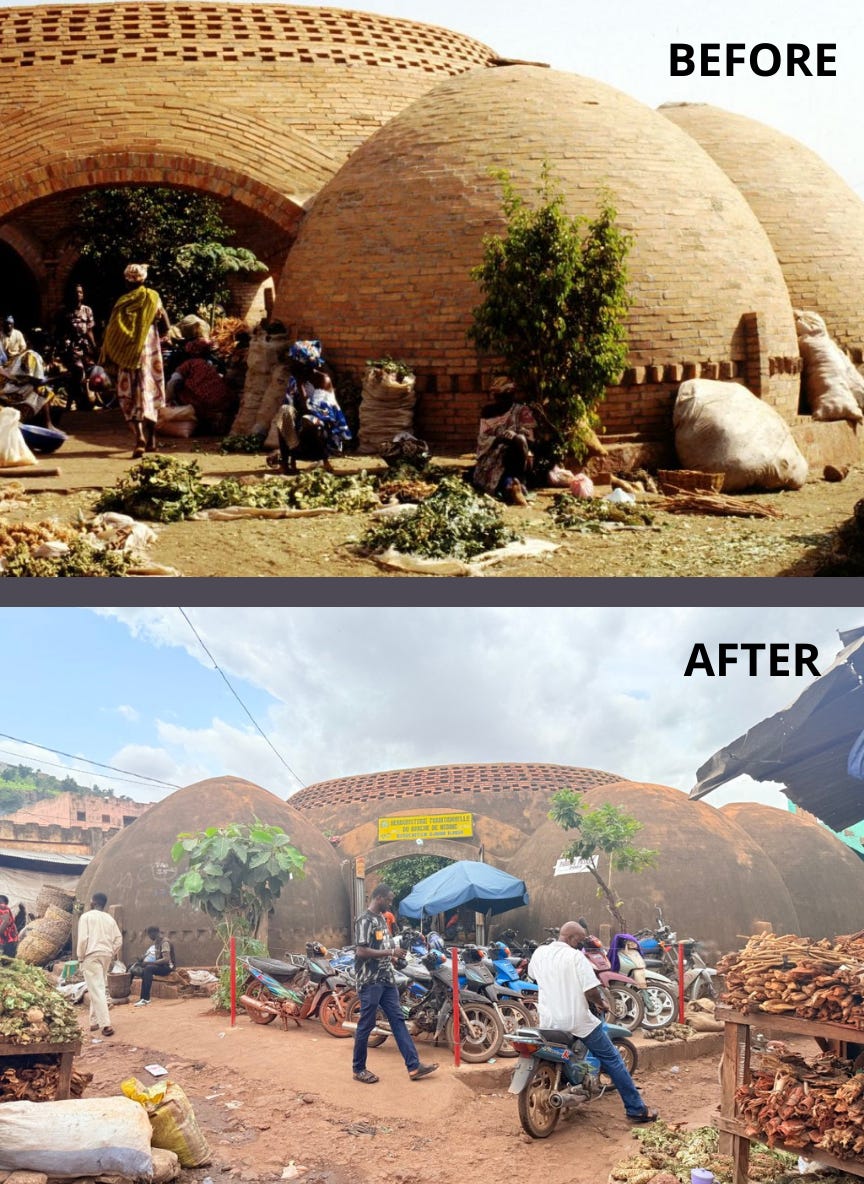
As soon as I arrived in Bamako, I hurried to visit the traditional herbalist's shop in the Medina market, Association DJAMA djigui. The Malian urban planner Mr. DEYOKO Abdoulaye kindly gave me the address, but when I arrived at the Medina market, the building was already hidden among the market stalls.
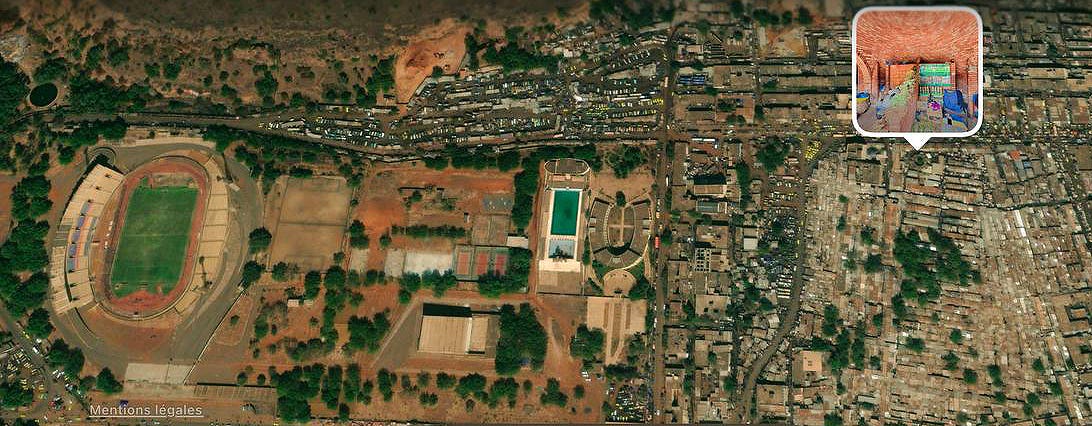
My motorcycle taxi driver was kind enough to search and ask shopkeepers for directions until we came across some domed volumes.
How great was my satisfaction to feast my eyes, for reality is nothing like the photos.
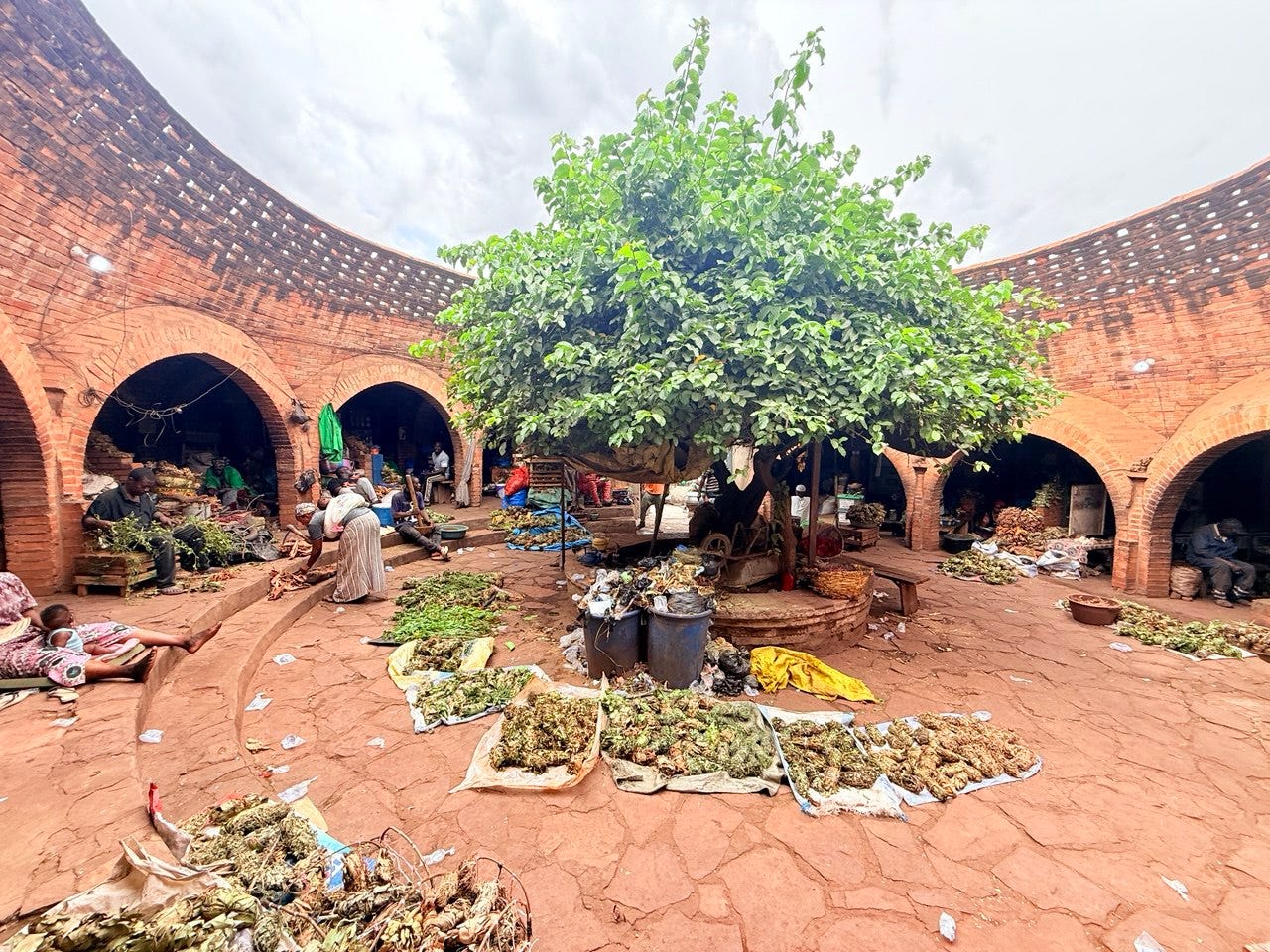
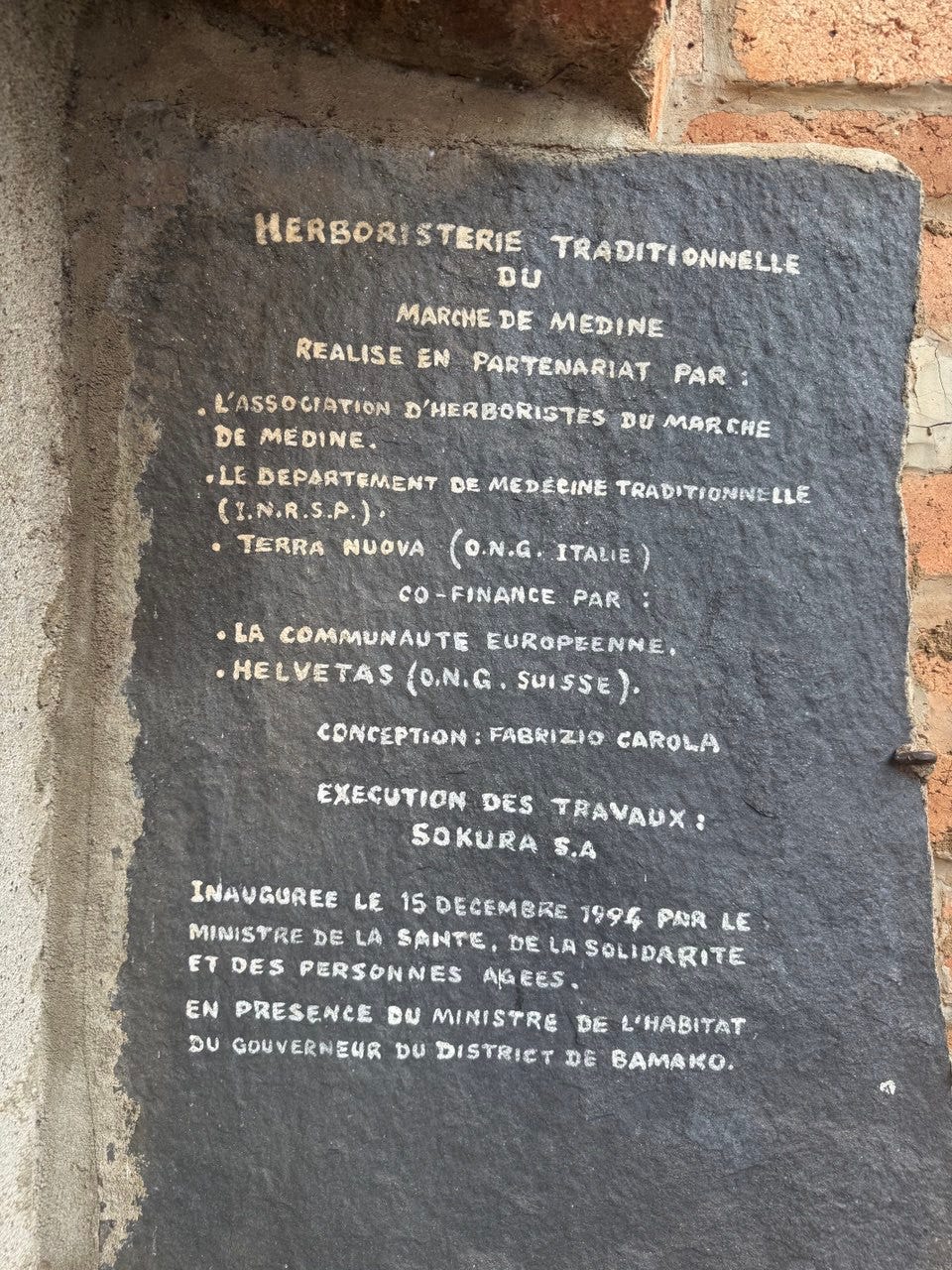
Shortlisted for the Aga Khan Award for Architecture in 1998, this architectural gem was designed by architect Fabrizio Corala in 1993 and delivered on December 15, 1994, under the commission of Mali's National Institute of Traditional Medicine.
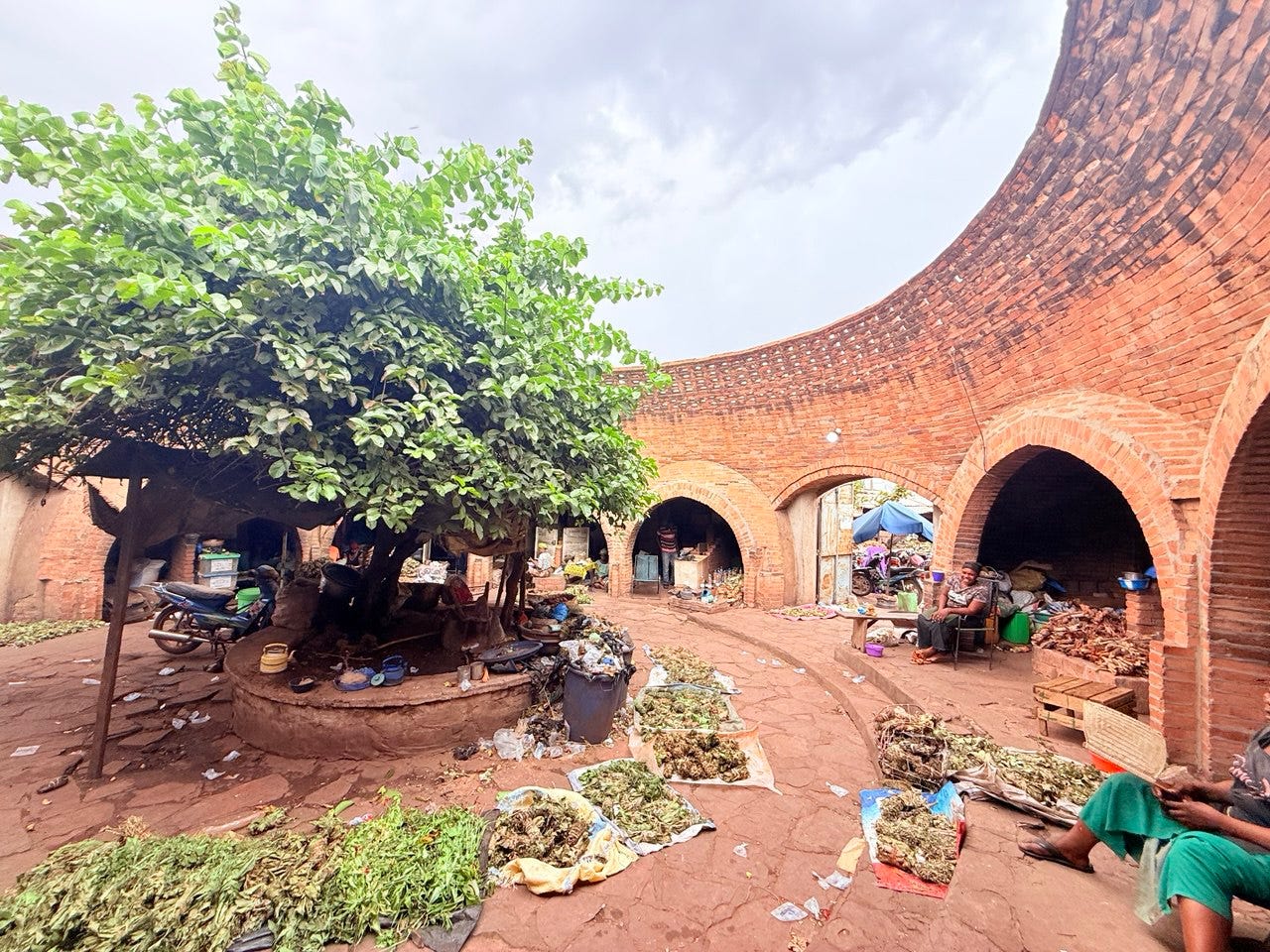
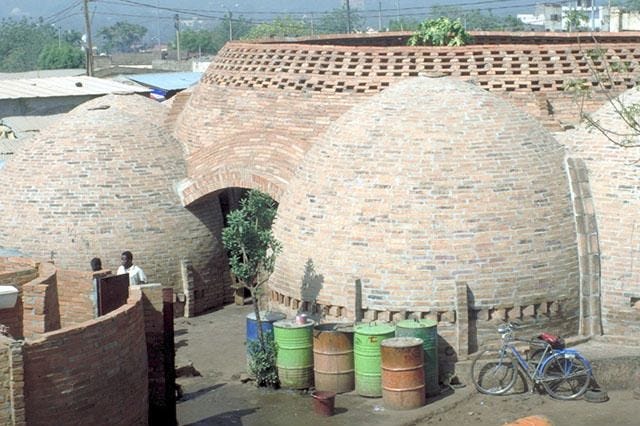
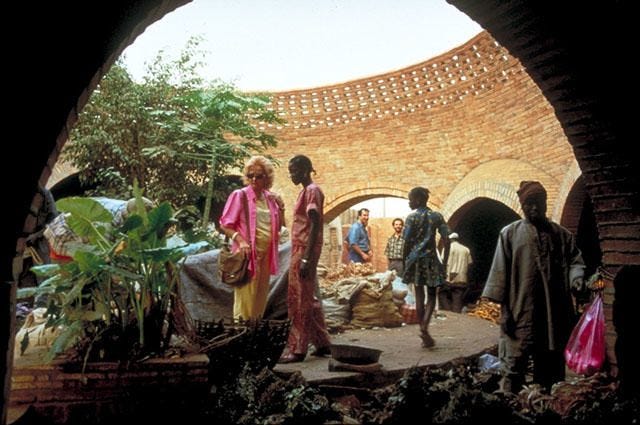
The terracotta building consists of 10 domes arranged in a circle with a radius of 10.5 meters on a stone platform around a patio. In the center of the patio is a tree and a circular bench where herbalists' customers can sit while waiting for their orders to be prepared. The central patio is partially shaded by a structure composed of the lower third of a central brick dome that connects all the domes and provides shade along the patio's circulation area.
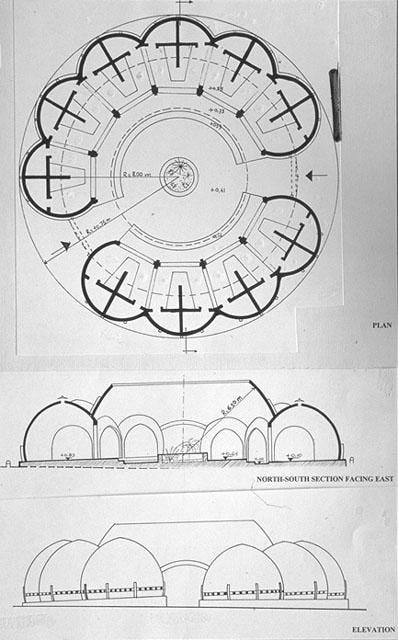
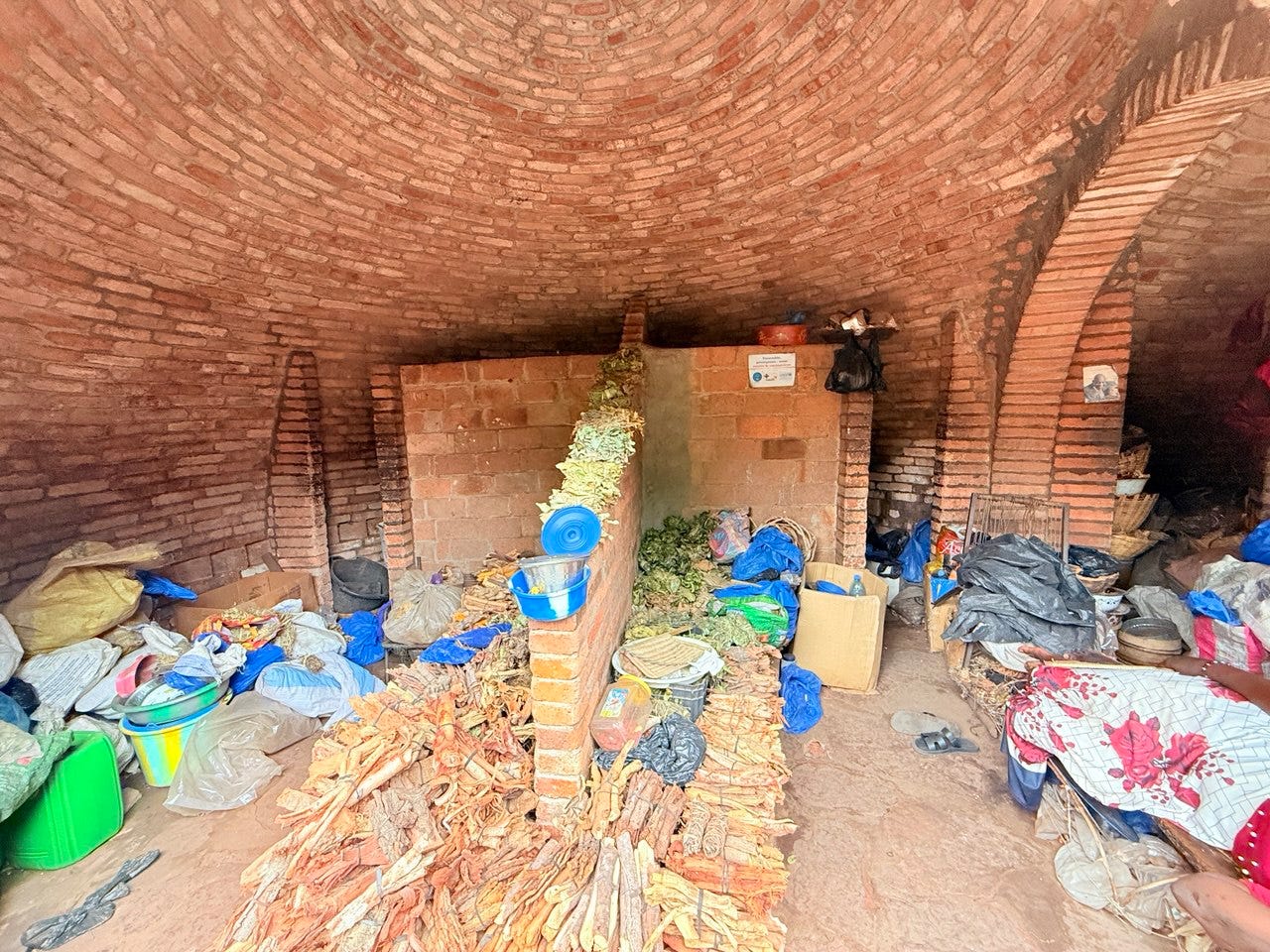
Each dome houses storage and exhibition spaces on two sides. The platform was divided into twelve sections, two for the entrances and the others for the domes.
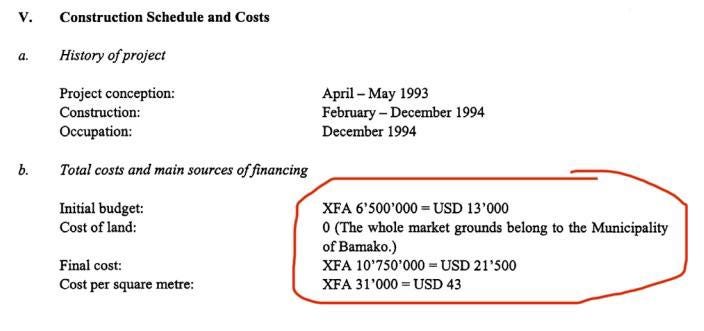
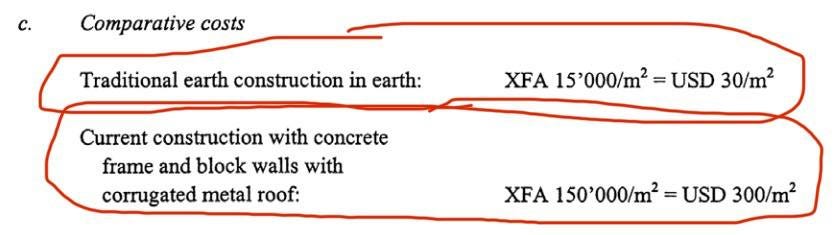
The building covers an area of 440 m² and cost 10 million seven hundred and fifty thousand CFA francs in 1994.
Fabrizio Carola ingeniously used the exclusive compressive strength of arches, vaults, and domes to create shelters for herbalists without the need for concrete.
The arches and vaults were constructed using wooden formwork made on site.
According to the young herbalist Mary BAGAYOKO, the exterior of the building was plastered in 1998 by the first occupants, who were the parents of the herbalists currently on site.
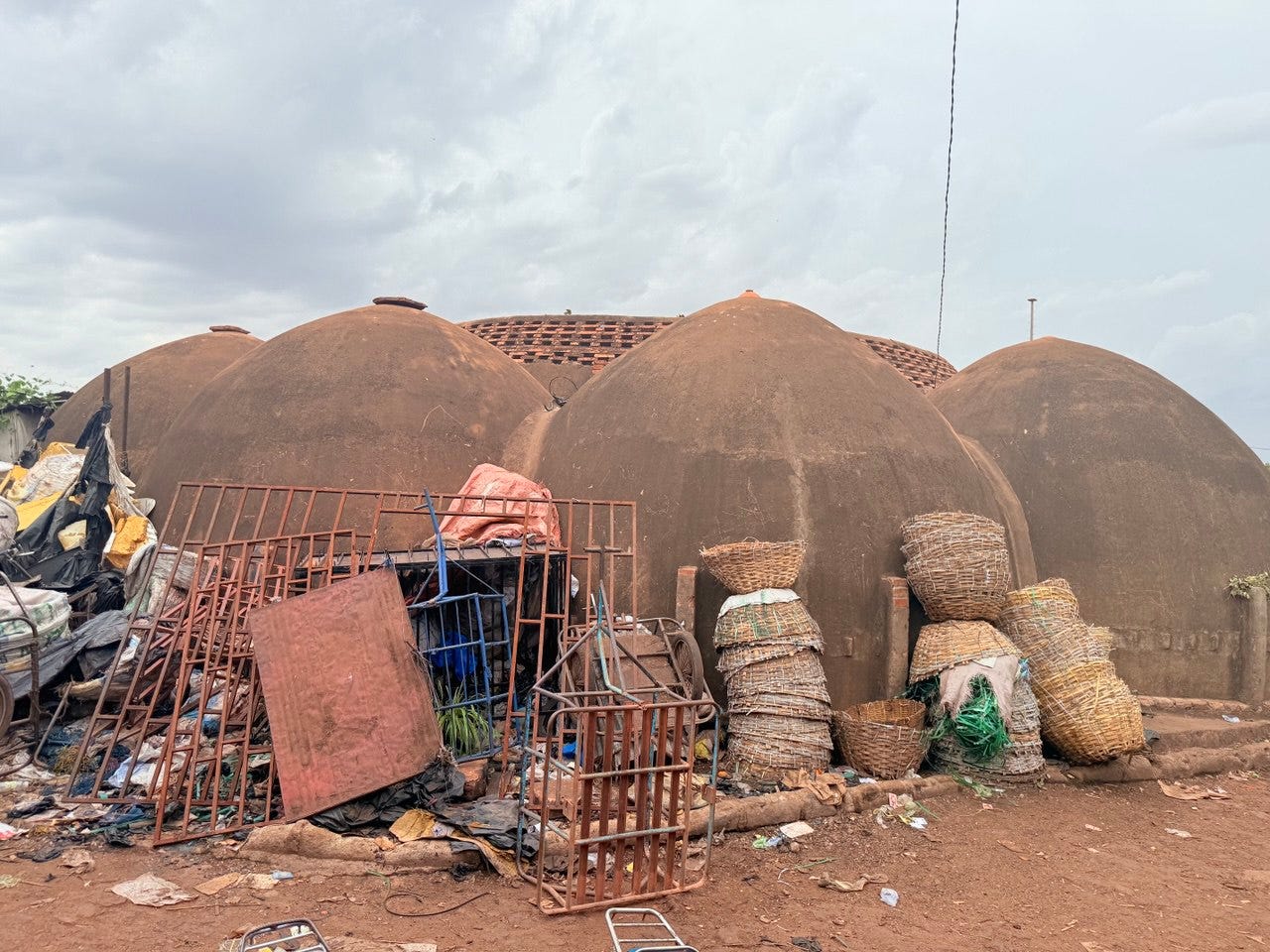
I took the time to explain to him that we could use earth plaster on the outside instead of cement plaster, because cement detracts from the beauty of the building.
I sincerely hope that this building will remain standing for a long time to come as an architectural lesson, showing us what is possible with local materials and limited resources.
What does this building inspire in you?
Do you think the architecture of this building is suitable for our markets in Africa?
AKWABA
My name is OMON ABULE SOWO. I am an architect with a passion for African architecture.
If you liked this article, click on the heart ❤️. Share it to help me share my research on African architecture.
References
https://www.archnet.org/sites/1423